EXHIBITIONS
Throughout the year, the pier is transformed to host a variety of exhibitions, often in collaboration with various institutions and Les Bains. The Association des Usagère.ers.x des Bains des Pâquis (AUBP) also plays an active role in this area, creating and producing its own exhibitions. These events focus mainly on subjects relating to Lake Geneva or the history and life of the Spa. Discover our exhibitions below.
The Wars of Lake Geneva
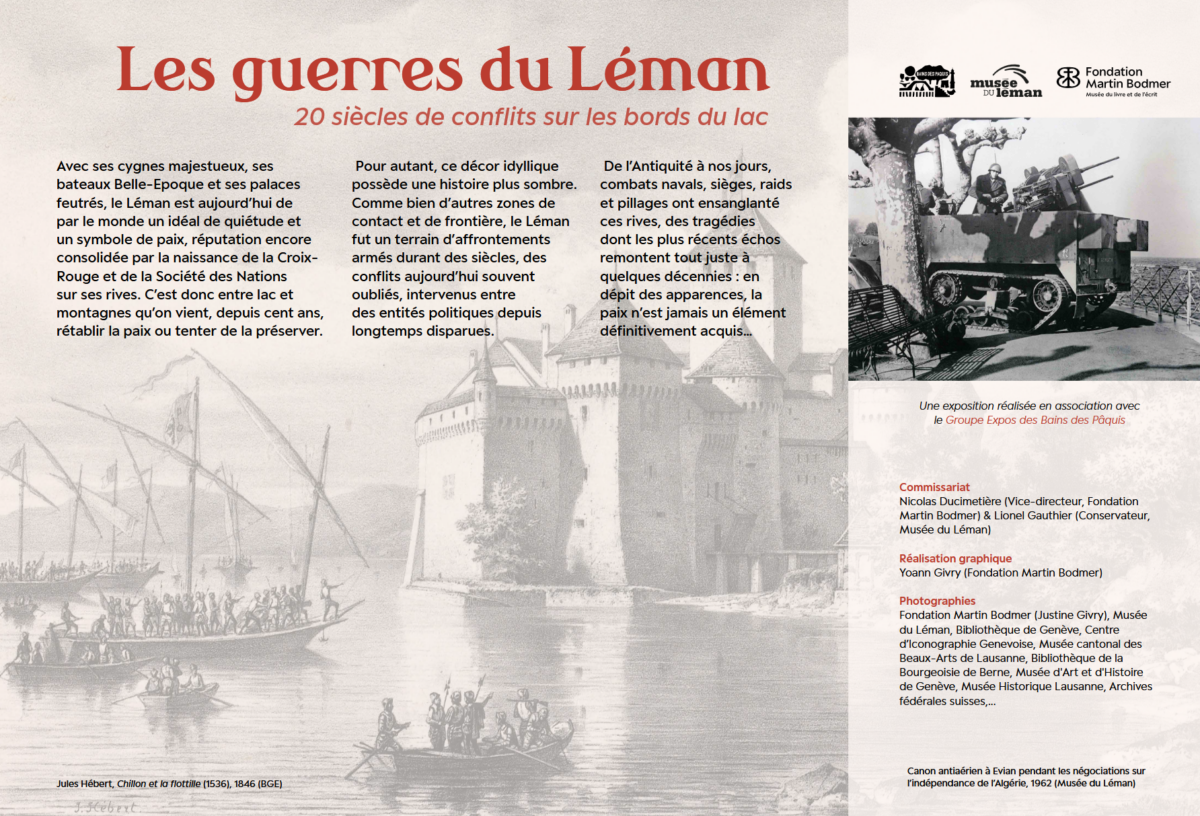
With its majestic swans, Belle Époque boats, and elegant luxury hotels, Lake Geneva is today recognized worldwide as a haven of tranquility and a symbol of peace—a reputation further cemented by the founding of the Red Cross and the League of Nations on its shores. It is therefore between the lake and the mountains that people have been coming for a century to restore peace or attempt to preserve it.
Nevertheless, this idyllic setting has a darker history. Like many other border and contact zones, Lake Geneva was the site of armed conflicts for centuries—conflicts that are often forgotten today, fought between political entities that have long since disappeared.
From antiquity to the present day, naval battles, sieges, raids, and pillaging have stained these shores with blood—tragedies whose most recent echoes date back just a few decades: despite appearances, peace is never a certainty…
The Final Take
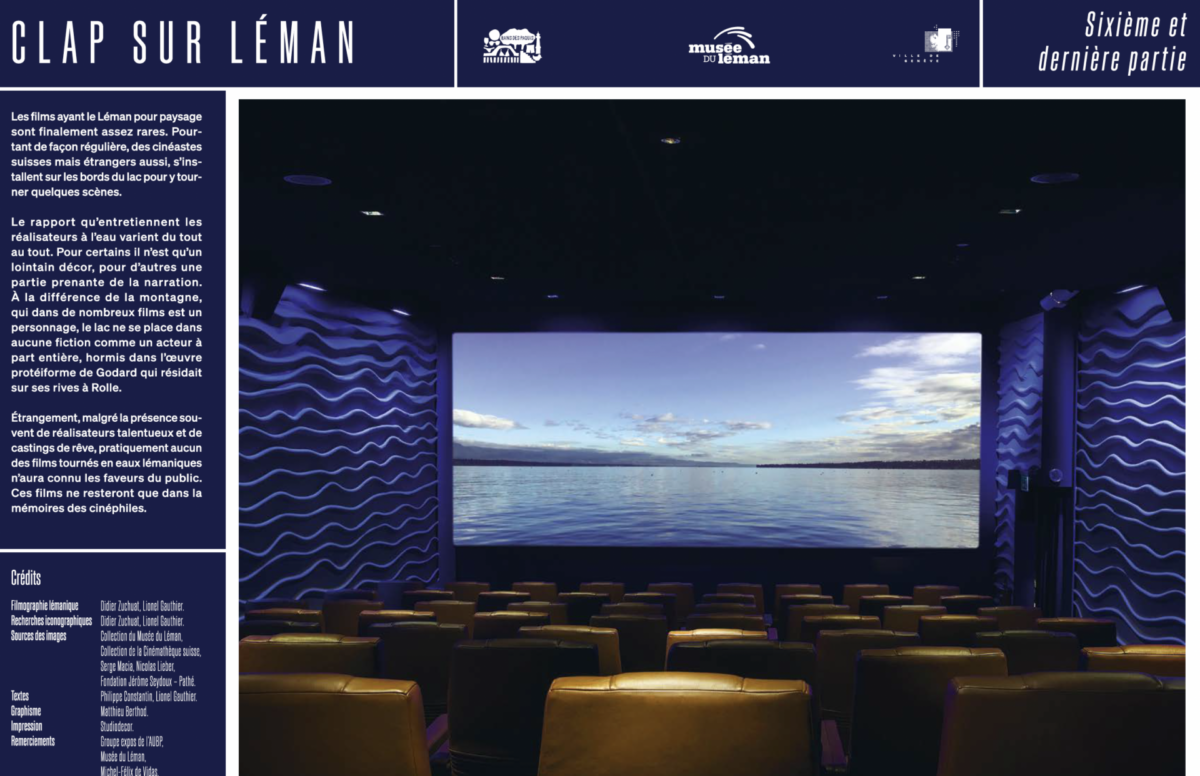
The sixth and final installment of the “Lake Geneva and Cinema” series.
From September 25 through the end of November.
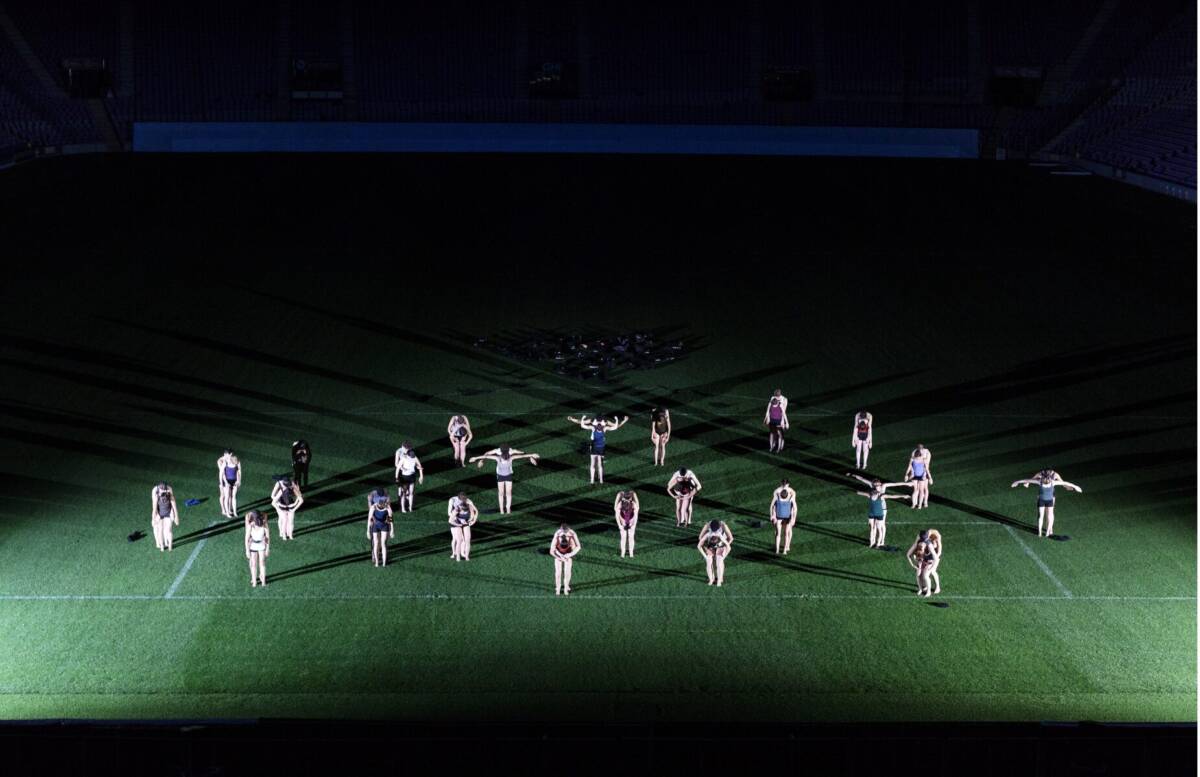
20 years of the Fête de la Danse
The Fête de la Danse Genève will be holding its 20th edition from May 6 to 10, 2026. To celebrate this anniversary edition, we invite you to step back in time through an exhibition of photographs. These powerful images reflect a mani-festation for the general public, which values dance in all its forms. With you and for you! Immerse yourself in this extraordinary adventure, and let your eyes wander. Let yourself be carried away by this great collective celebration that has Geneva dancing!
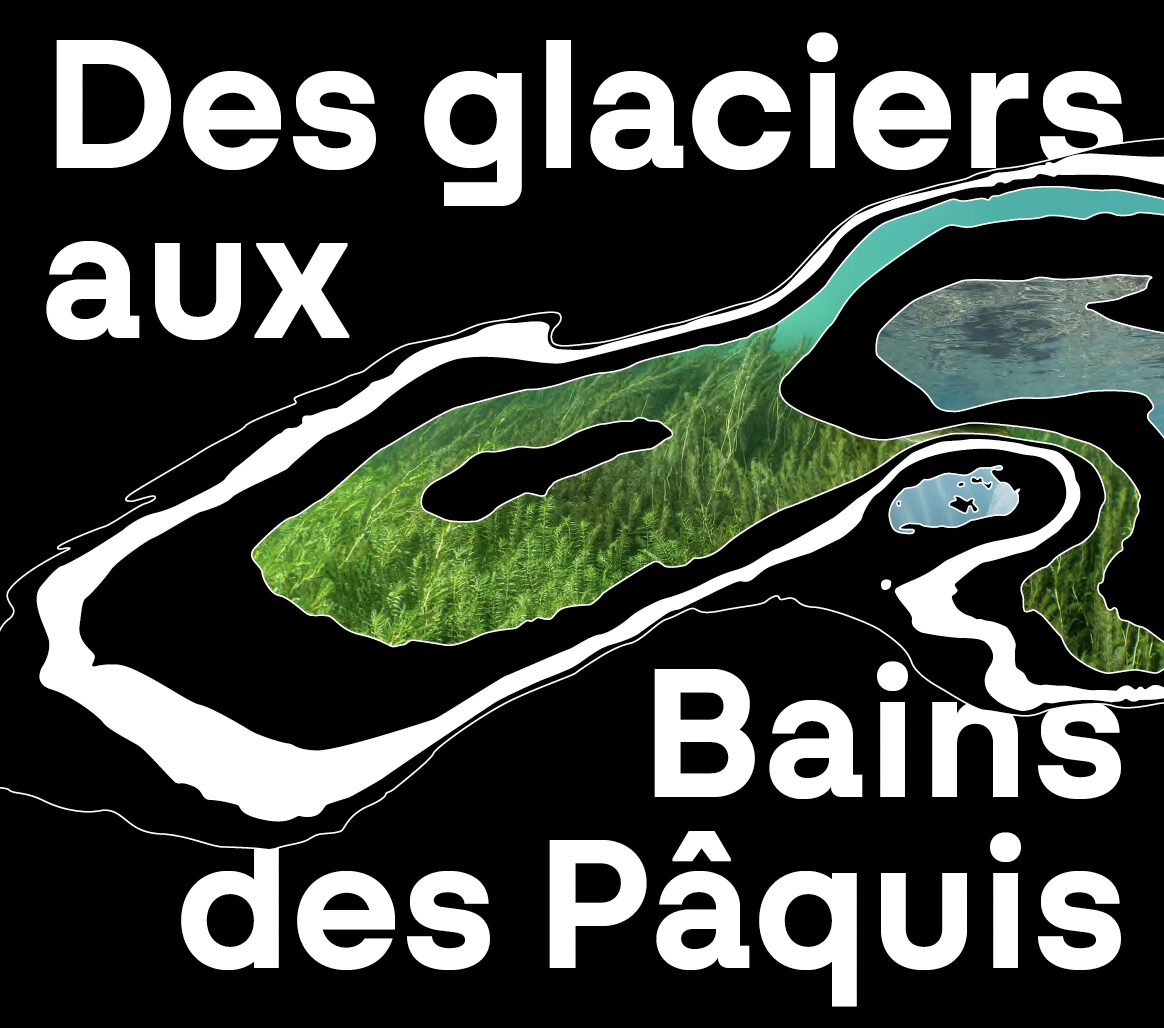
From the Glaciers to the Bains des Pâquis
Immerse yourself in the fascinating world of a drop of water.
During its journey from one of the springs of Lake Geneva
to the Geneva harbor, water shapes the land,
creates surprising aquatic landscapes and serves
for plants and animals. In the
of Mr. Alfonso Gomez’s year as mayor, the Ville de
Geneva wants to showcase Lake Geneva and its biodiversity
in an immersive way. Photographer Michel Roggo
invites us to dive in with him and discover
the treasures hidden beneath the mirror waters of our
regions. And yet, accustomed to expeditions in rough waters
of the planet, his encounter with the Lake of Geneva
has many surprises in store, which he shares with us for
our greatest curiosity.
Dial a poem, Mamco
An exhibition dedicated to the great American poet John Giorno and his friends, which also traces the evolution of poetry in the 1970s…
Uni Diversity
NEURODIVERSITY?
As part of a reporting workshop supervised by Denis Ponté, students in the “Understanding and combating prejudice” course and the “Academic Horizon” program at the University of Geneva were able to use photography to document their understanding of neurodevelopmental disorders: how are these disorders perceived by students? What impact do they have on the people concerned and those around them? How can such disorders be reconciled with studies and private life?
11 students – Sara Almeida, Salma Bairouk, Isabell Begemann, Caroline Breton, Aileen Colmenares, Laetitia Deniña-Oguey, Elsa Duchez, Loane Ménétrey, Marianne Paredes, Maryna Syhydiuk and Céline Wüthrich – use the refined medium of visual representation to share their often intimate experiences of these socially invisible disorders and the discrimination they entail.
This exhibition,the 5th in the University | Diversity series, is a contribution to the International Day of Persons with Disabilities, celebrated on December 3.
Partners
AUBP Expos Group
Foyer-Handicap Foundation
University of Geneva
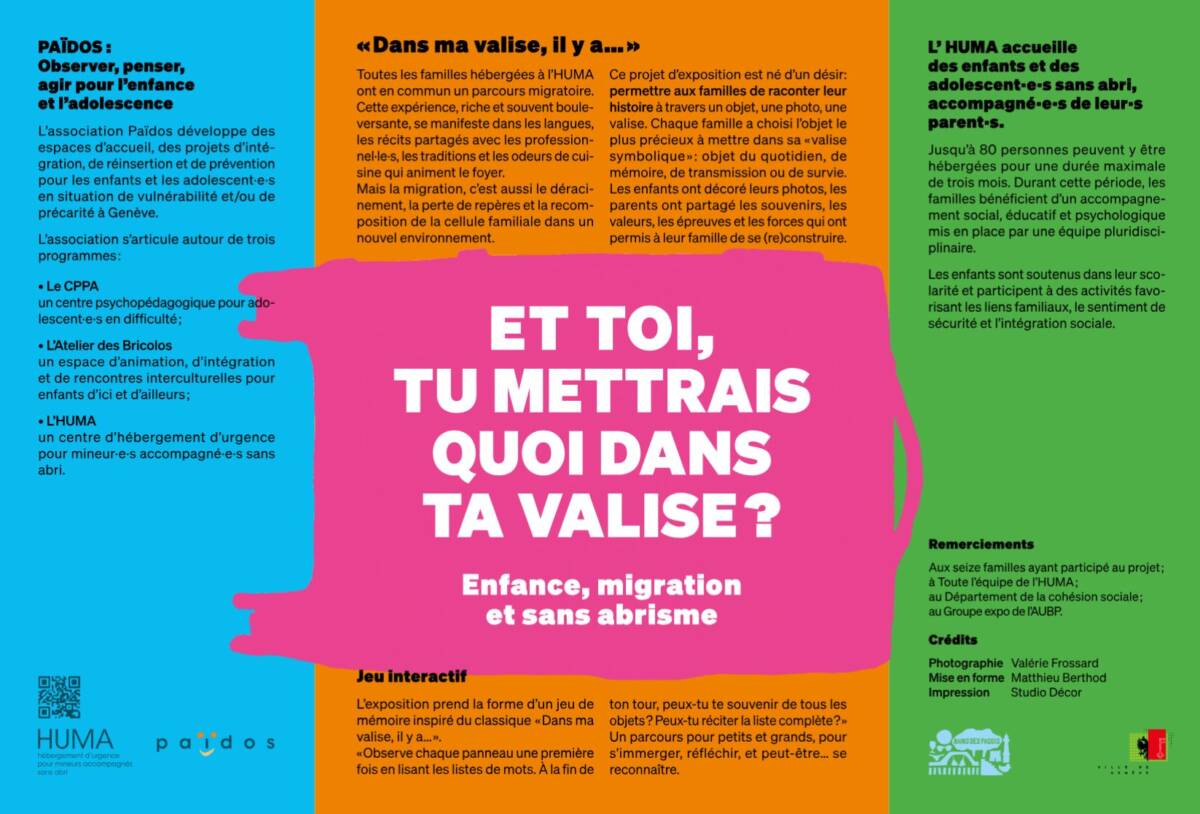
And what would you pack in your suitcase?
The exhibition takes the form of a memory game inspired by the classic “Dans ma valise, il y a…”. “Look at each panel once, reading the word lists. At the end of your turn, can you remember all the objects? Can you recite the whole list?” A journey for young and old, to immerse, reflect, and perhaps… recognize yourself.
An exhibition by the Païdos association